Fulmar
Wake Engineering · Spain · also known as Thales Fulmar · Updated
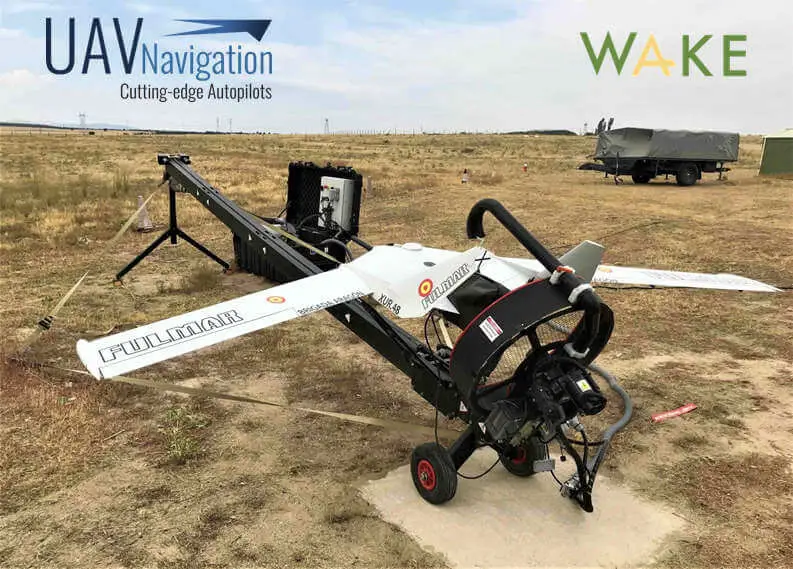
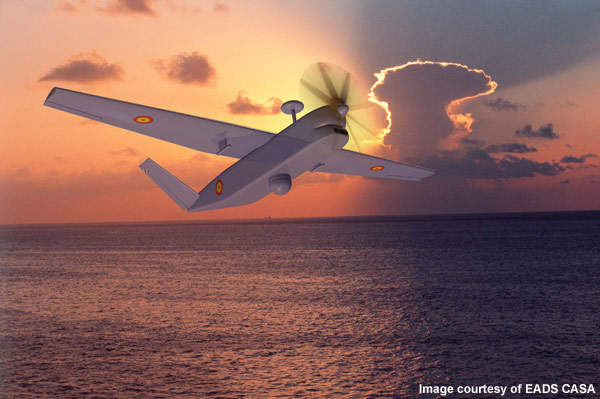
Fulmar is a catapult-launched, net-recovered fixed-wing mini UAV developed by Wake Engineering of Spain for maritime and land ISR missions, in service with Spain and Malaysia.
Overview
Wake Engineering, a Spanish UAV maker formerly known as Aerovision, developed Fulmar for intelligence, surveillance and reconnaissance work, including border surveillance, target acquisition and disaster response. The aircraft's flight control system was developed by fellow Spanish company UAV Navigation, which has worked on the Fulmar programme since its start. Thales Spain later became Wake Engineering's technology and commercialisation partner, marketing the aircraft and a navalised variant under the Fulmar and Fulmar X names; Wake Engineering has also been developing a water-landing variant for maritime patrol and fisheries-monitoring roles.
Fulmar's maritime design lets it take off from and land aboard a vessel while under way, a requirement set by the Malaysian Maritime Enforcement Agency (MMEA), which ordered six systems in April 2016 to equip new-generation patrol craft. The Spanish Ministry of Defence separately contracted for Fulmar mini UAVs in October 2017 as part of the Rapaz project, and the type became a candidate system for the Spanish Armed Forces' RPAS requirements.
Design and capabilities
Fulmar has a 3 m wingspan and a 1.2 m length, with a maximum take-off weight of about 20 kg and a payload capacity of up to 8 kg carried in a retractable, gyro-stabilised gimbal. Airforce Technology lists a cruising speed of 100 km/h, a maximum speed of 150 km/h, and operation in winds up to 70 km/h, with a maximum operating altitude of 3,000 m. The system is rated for up to 12 hours' endurance and an 800 km range without refuelling, with real-time video transmission to the ground station over distances up to 90 km. Fulmar launches by catapult and is recovered in a drop-down net, which the manufacturer says lets a three-person crew deploy the system in under 30 minutes from confined spaces or moving platforms such as ships; a complete system of two aircraft, launch and recovery equipment, and a mobile ground control station fits inside a medium-sized van.
Operational history
Wikipedia lists Fulmar as in service with Spain and Malaysia. The Malaysian Maritime Enforcement Agency ordered six Fulmar systems in April 2016 for its new-generation patrol craft, with Thales delivering the first unit to the shipbuilder in December 2016. Spain's Ministry of Defence contracted for the type in October 2017 under the Rapaz project.
Frequently asked questions
What is the Fulmar UAV?
Fulmar is a Spanish catapult-launched, net-recovered mini UAV built by Wake Engineering for maritime and land ISR missions.
What is the range of the Fulmar?
The manufacturer rates the Fulmar for up to 800 km of range and up to 12 hours of endurance.
How is the Fulmar launched and recovered?
It takes off by catapult and is recovered in a drop-down net, allowing operation from confined spaces or moving vessels without a runway.
Who operates the Fulmar?
Spain and Malaysia operate the Fulmar; Malaysia's Maritime Enforcement Agency ordered six systems in 2016 and Spain's Ministry of Defence contracted for the type in 2017.
How much can the Fulmar carry?
The aircraft carries up to 8 kg in a retractable, gyro-stabilised gimbal, within a maximum take-off weight of about 20 kg.