Atlante
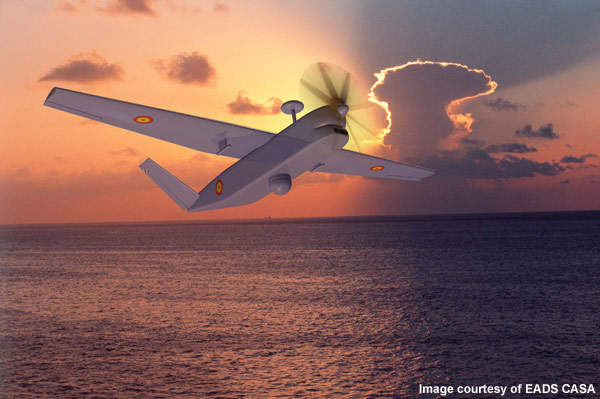
Atlante is a tactical, long-endurance unmanned aircraft system developed in Spain, originally by EADS Cassidian and now listed by Airbus among its unmanned technology demonstrators.
Overview
Spain's Centre for the Development of Industrial Technology (CDTI) approved the Atlante project in December 2009 under the country's 2007–2012 Aeronautics Strategic Plan, with the airframe designed by MAS and more than 140 subcontractors involved in the programme, backed by investors including Indra, GMV and Aries. The aircraft made its first flight on 28 February 2013. In October 2014, Airbus Defence and Space — the renamed successor to EADS Cassidian Spain — submitted Atlante to the European Aviation Safety Agency (EASA) for civil type certification, the first such application for a UAV in Europe; Airbus had separately obtained a lower-tier Cat 2 system certification allowing flights over segregated civil airspace. Airbus's current website lists Atlante among past technology demonstrators, alongside Talarion, EuroHawk and Quadcruiser, rather than among its active programmes, which now centre on the Eurodrone and Flexrotor.
Design and capabilities
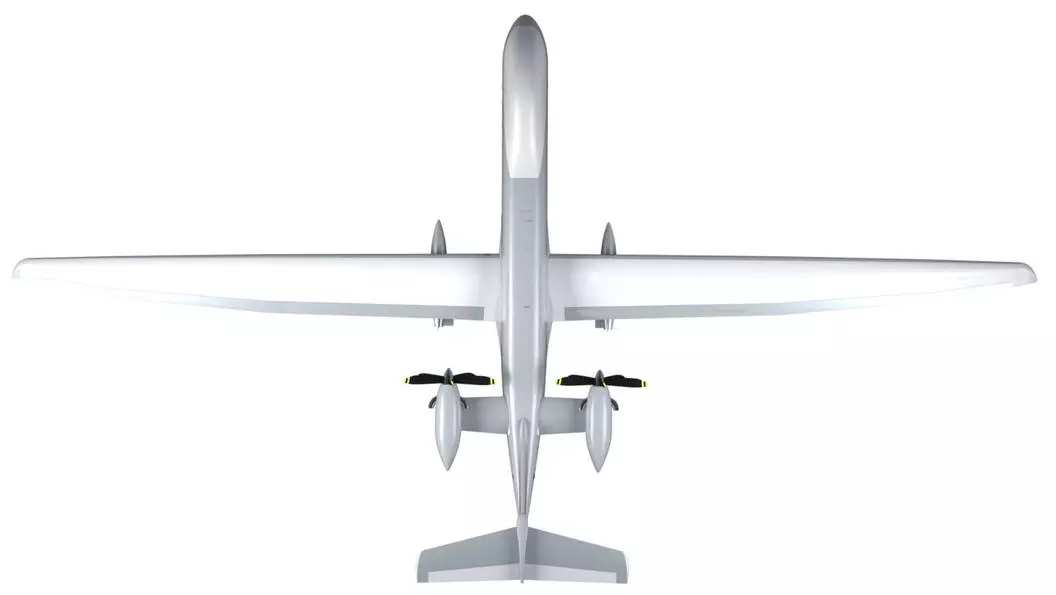
Airforce Technology's published specification gives Atlante a length of 4.6 m, an 8 m wingspan, a 520 kg maximum take-off weight and a 100 kg payload, with a 400 km range, a 20,000 ft (6,096 m) service ceiling and a stated maximum endurance of 20 hours. A later Shephard Media report and manufacturer materials instead give a 570 kg maximum take-off weight with the same 100 kg payload and 8 m wingspan; other secondary reporting puts full-payload endurance closer to 10–14 hours, suggesting the 20-hour figure applies at a reduced payload. The aircraft is powered by a single piston engine in a propeller-driven configuration. It needs no dedicated runway: it can take off and land conventionally using landing gear suited to unprepared strips, or launch from a rail launcher and recover under parachute, with fully automated take-off and landing supported by a GMV-designed flight control computer. Sensor options include electro-optical and infrared cameras, a laser designator and a synthetic aperture radar.
Operational history
Atlante was developed primarily for Spanish military and homeland-security roles — intelligence, surveillance, target acquisition and reconnaissance, border and maritime surveillance, and support for the Guardia Civil and emergency agencies — alongside civil applications such as pipeline, power-line and railway inspection and disaster response. No confirmed operational fielding or export customer has been publicly reported; as of 2018, Spanish defence press described continued interest from the Spanish Air Force in an upgraded "Atlante+" variant, but no later confirmation of service entry has been found.
Frequently asked questions
What is the range and endurance of the Atlante?
Airforce Technology lists a 400 km range and a maximum endurance of 20 hours; other reporting suggests endurance drops to roughly 10–14 hours at full 100 kg payload.
How much does the Atlante weigh?
Sources give either 520 kg or 570 kg maximum take-off weight, with a consistent 100 kg payload capacity and 8 m wingspan.
When did the Atlante first fly?
28 February 2013, according to AIN Online's coverage at the time.
Who makes the Atlante?
It was developed by EADS Cassidian Spain, which was renamed Airbus Defence and Space; Airbus's current website lists it among past technology demonstrators rather than active programmes.
Is the Atlante in service?
No confirmed operator or service entry has been publicly reported. It completed its first flight in 2013 and pursued European civil certification through 2016, but Airbus now presents it as a past demonstrator rather than a current product.