WATCHKEEPER
Thales · United Kingdom · also known as Watchkeeper WK450, Thales Watchkeeper WK450, Watchkeeper X · Updated
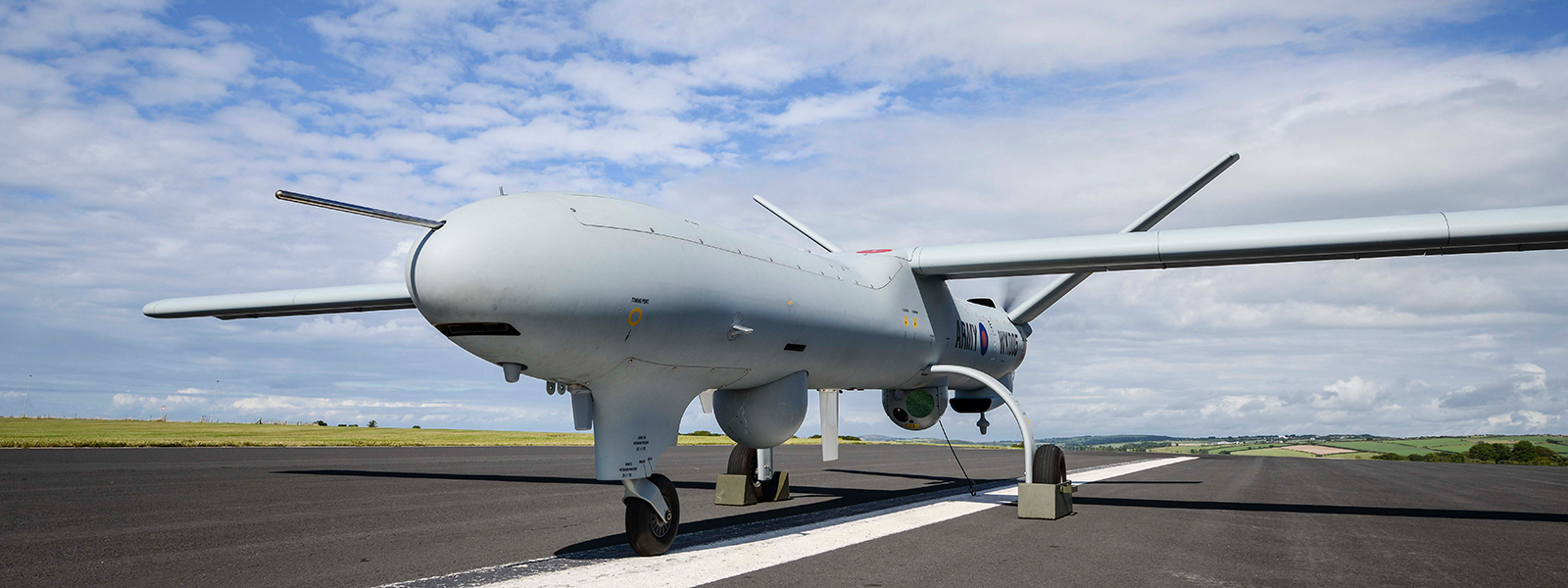
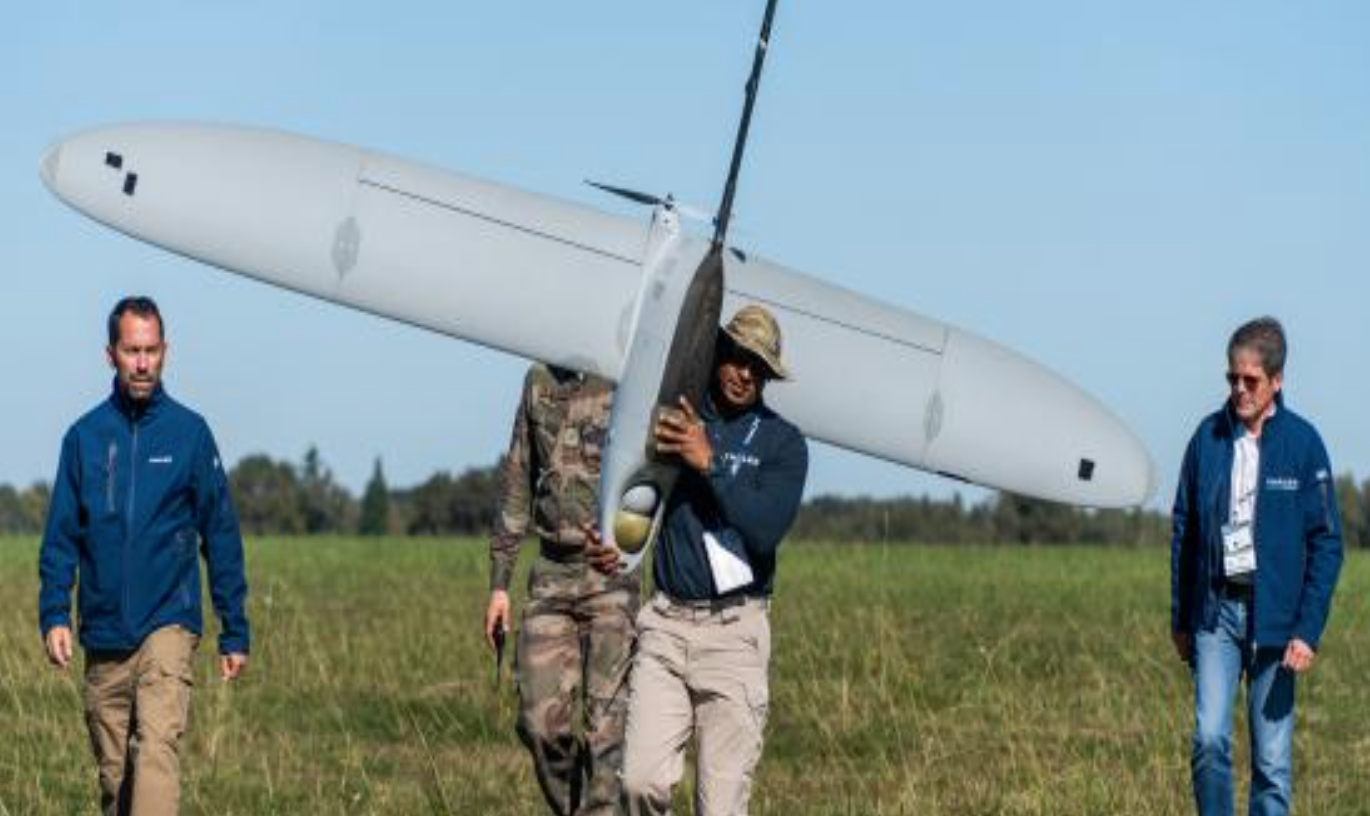
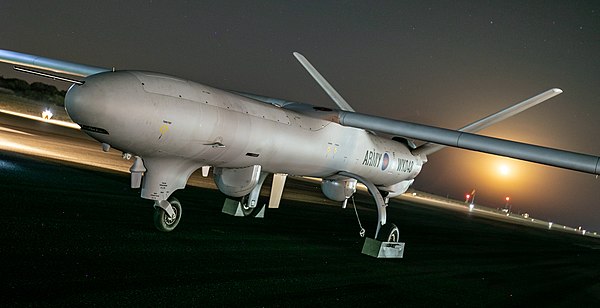
WATCHKEEPER (WK450) is a tactical intelligence, surveillance, target acquisition and reconnaissance (ISTAR) unmanned aircraft built for the British Army by Thales UK and Elbit Systems, first flown on 14 April 2010 at Parc Aberporth, Wales. Based on Elbit's Hermes 450 airframe, it was Europe's largest UAS programme at the time of its introduction and the first UK-operated UAS to fly alongside manned aircraft in controlled civilian airspace.
Overview
The UK Ministry of Defence selected the Thales/Elbit Systems bid, built on the Hermes 180 and Hermes 450 designs, for its SENDER tactical UAV requirement in 2004, with the two companies forming the UAV Tactical Systems (U-TacS) joint venture in Leicester the following year. Development ran years behind an original 2010 in-service date; the programme reached full operational capability in November 2018 and full clearance to service in April 2019, by which point Wikipedia records total programme spending above £1 billion. Wikipedia reports that Thales divested its 49% stake in U-TacS to Elbit Systems in January 2026, making the joint venture a wholly owned Elbit Systems UK subsidiary.
Watchkeeper entered British Army service with 47 Regiment Royal Artillery and deployed operationally to Camp Bastion, Afghanistan, through to October 2014. The Defense Post reports that the aircraft was later used domestically under Operation Deveran to help monitor small-boat crossings of the English Channel from 2020, though it notes critics questioned the programme's practical contribution given the limited number of sorties flown. The UK announced in late 2024 that it would withdraw the fleet by March 2025, well ahead of the type's original 2042 out-of-service date; a parliamentary answer in October 2025 extended that date to March 2027 pending a replacement under the Project Corvus programme. The Defense Post reports Romania ordered up to seven export-variant Watchkeeper X systems under a December 2022 framework, with the first three delivered in 2023 and later airframes planned for domestic assembly.
Design and capabilities
Watchkeeper is 6.5 m long; Wikipedia gives a 10.9 m wingspan, though most trade-press reporting, including The Defense Post, states 10.5 m, and the exact figure is not consistently reported. Maximum take-off weight is 485 kg, carrying up to 150 kg of sensors and datalink equipment. A single Wankel rotary engine from UAV Engines Ltd, an Elbit Systems subsidiary, rated at roughly 38.8 kW, drives the aircraft at a cruise speed of about 77 kn (142.6 km/h); Wikipedia records a typical endurance around 14 hours, while The Defense Post's specification table states over 16 hours — older 2000s-era reporting quoted endurance close to 20 hours, but those figures describe the Hermes 450 baseline rather than the heavier, sensor-laden Watchkeeper. Service ceiling is about 16,000 ft (4,900 m), and the datalink range from a single ground control station is up to 150 km, extendable by linking multiple stations.
The standard sensor fit pairs an Instro target-acquisition electro-optical/infrared camera with a Thales I-Master dual-mode synthetic-aperture radar offering ground moving-target indication, giving an all-weather surveillance capability. The aircraft takes off from a conventional runway and lands using an automated system Thales calls Magic ATOLS, is controlled from a 20 ft containerised mobile ground control station over a NATO-standard line-of-sight datalink, with an optional satellite-communications link, and is unarmed.
Operational history
Watchkeeper's only announced military operator is the British Army, where the type has suffered a string of losses: Wikipedia records crashes in February and March 2017 over Cardigan Bay that grounded the fleet for four months, a June 2018 crash near West Wales Airport, a Cyprus loss in October 2020 following an avionics power failure, a May 2022 Mediterranean ditching after an engine failure, and a further loss in New Mexico in November 2022 — described in contemporary reporting as the type's eighth loss since 2014. Romania is the only announced export customer, procuring the Watchkeeper X variant.
Variants
Watchkeeper X is the export version offered to Romania, Thales's only confirmed export sale; The Defense Post reports it keeps the WK450's airframe and flight performance while adding a modular, open sensor architecture, with Romania's aircraft fitted with the Spectro-XR multi-spectral EO/IR payload. Thales has also pitched the Watchkeeper X, with optional maritime radar, COMINT/ELINT and electronic-support payloads, to France and Poland without a reported order from either.
Frequently asked questions
Who operates Watchkeeper?
The British Army is the sole military operator of the baseline WK450; Romania has ordered the export Watchkeeper X variant.
How long can Watchkeeper fly?
Wikipedia gives a typical endurance around 14 hours; The Defense Post's specification table states over 16 hours. Sources do not agree on a single figure.
What sensors does Watchkeeper carry?
An Instro electro-optical/infrared camera and a Thales I-Master synthetic-aperture radar with ground moving-target indication, for day, night and all-weather surveillance.
Is Watchkeeper still in service?
Yes, as of late 2025. The UK had planned to retire the fleet by March 2025 but extended the out-of-service date to March 2027 pending the Project Corvus replacement programme.
What is Watchkeeper based on?
Elbit Systems' Hermes 450 airframe, developed into the WK450 by the Thales/Elbit joint venture UAV Tactical Systems.